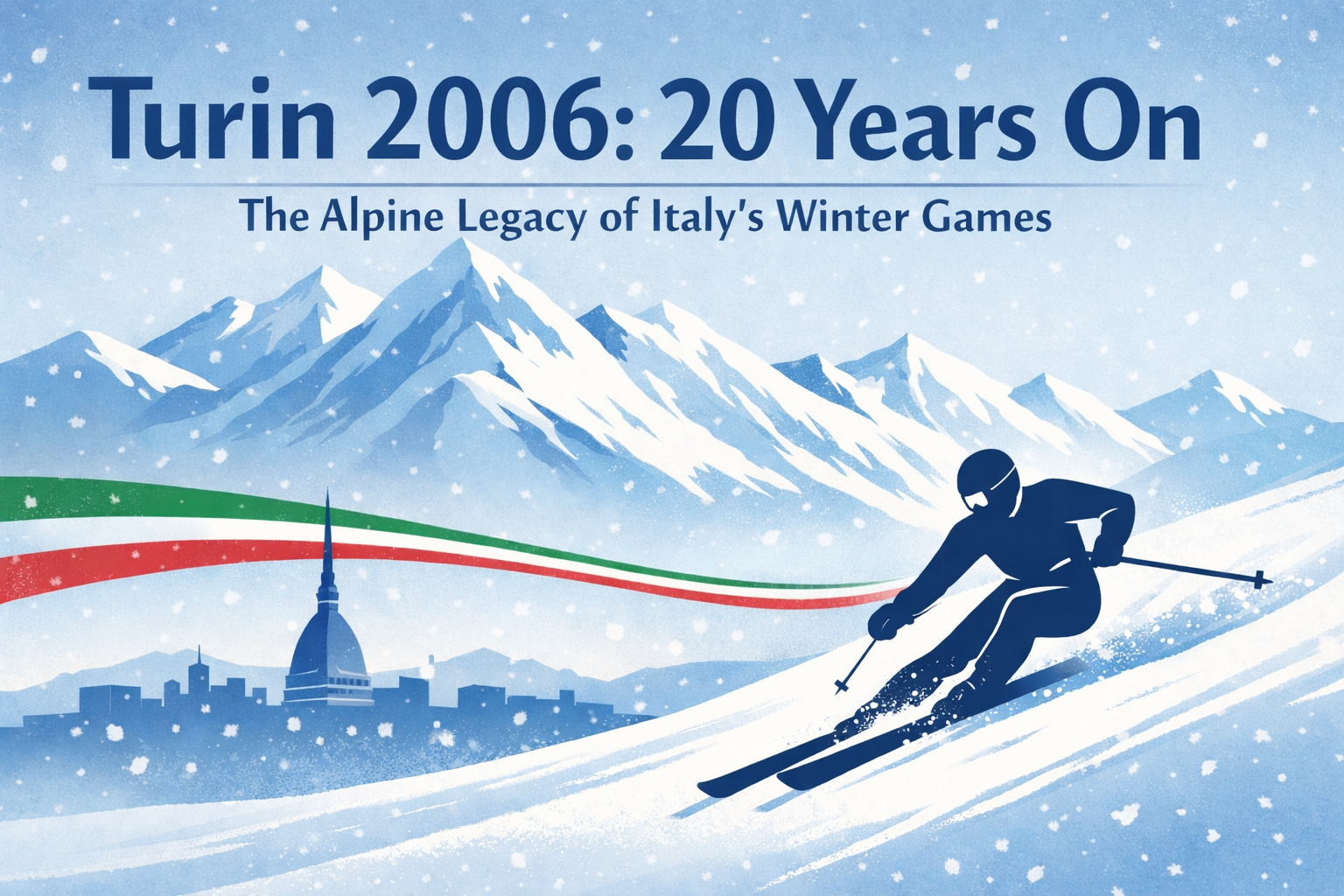
Two decades. It feels like only yesterday that the “Passion Lives Here” slogan echoed through the Italian Alps. Twenty years have passed since the Turin 2006 Winter Olympic Games, an event that transformed an industrial car-manufacturing hub into a world-class winter sports destination and a vibrant, modern European city.
Today, on the 20th anniversary of the Opening Ceremony, we look back at the venues that defined the XX Olympic Winter Games. From the sleek ice rinks of the “Olympic District” to the snow-capped peaks of the Susa and Chisone Valleys, we explore their “then” and “now” stories—evaluating a legacy that paved the way for Italy’s upcoming return to the Olympic stage in 2026.
The Heart of the City: The Turin Olympic District
Turin used the Games to revitalize its urban core, repurposing historic exhibition spaces and building bold new arenas that remain central to the city’s cultural life.
| Venue Name (2006) | Olympic Event (2006) | Capacity | Post-Olympic Use (2026) |
|---|---|---|---|
| Stadio Olimpico | Ceremonies | 35,000 | Stadio Olimpico Grande Torino. The permanent home of Torino FC (Serie A). It remains a premier football and concert venue. |
| Palasport Olimpico | Ice Hockey (Finals) | 12,350 | Inalpi Arena. Italy’s largest indoor arena. It hosts the ATP Finals (tennis) and major global concert tours. |
| Oval Lingotto | Speed Skating | 8,500 | Exhibition Centre. A vital part of the Lingotto complex, now used for major fairs, trade shows, and international book festivals. |
| Palavela | Figure Skating, Short Track | 8,000 | Active Ice Hub. Continues to host world-class figure skating championships and serves as a public skating and sports venue. |
| Torino Esposizioni | Ice Hockey | 5,400 | University Transformation. Currently being integrated into a major project for the University of Turin and a new central library. |
| Piazza Castello | Awarding Ceremonies | N/A | The City’s Living Room. Returned to its role as Turin’s historic central square, hosting major public events and royal history. |
The Mountain Legacy: The Alpine & Nordic Hubs
While the ice was in the city, the “White Green” legacy took place in the mountains. These venues faced the toughest challenge: remaining viable for professional sport while supporting local tourism.
- Sestriere (Men’s Alpine): Known as “The Milky Way,” Sestriere remains one of Europe’s premier ski resorts. The competition runs are still used for FIS World Cup events, maintaining its status as a high-performance hub.
- San Sicario Fraiteve (Women’s Alpine & Biathlon): The slopes continue to attract thousands of tourists annually, though the specialized biathlon infrastructure has transitioned more toward seasonal high-altitude training.
- Pragelato (Ski Jumping & Cross Country): The cross-country trails remain a Mecca for Nordic skiers. While the large ski jumps have seen less frequent use in recent years due to maintenance costs, the area remains Italy’s premier Nordic training center.
- Sauze d’Oulx (Freestyle Skiing): This vibrant village remains a favorite for British and European skiers, with the Olympic runs integrated into the vast commercial ski network.
- Bardonecchia (Snowboarding): The halfpipe and Olympic village here solidified the town’s reputation as the “snowboard capital” of the Italian Alps, a legacy that continues with a thriving youth sports culture.
The “Sliding” Challenge: Bobsleigh & Luge
Cesana Pariol: The site of bobsleigh, luge, and skeleton. Like many sliding tracks globally, Cesana Pariol has faced significant hurdles. After years of high maintenance costs, the track was mothballed. However, with Italy hosting the Milano-Cortina 2026 Games, the debate over the legacy of sliding tracks has returned to the national spotlight, serving as a cautionary tale for future host cities about specialized infrastructure.
Regional Impact: Pinerolo & The Valleys
- Palaghiaccio (Pinerolo): The site of the Curling events. This venue was a massive success for a niche sport, sparking a permanent interest in curling in the region. It continues to operate as a multi-purpose ice rink and community center.
- Olympic Villages: The villages in Turin, Bardonecchia, and Sestriere were converted into residential housing and student accommodations, providing a much-needed boost to the local housing market and university infrastructure.
The Enduring “Passion” Legacy
Twenty years later, the venues of Turin 2006 represent a sophisticated urban success story. Turin successfully shed its image as a “grey industrial city” and emerged as a “city of the arts and sport.” While some specialized mountain venues faced sustainability challenges, the urban infrastructure—particularly the Palasport Olimpico and Stadio Olimpico—remains the gold standard for Olympic legacy.
As Italy prepares to co-host the Winter Olympics once again in 2026, the lessons of Turin serve as a blueprint. The vision to integrate the Games into the fabric of the city was a victory that continues to pay dividends two decades later.
Looking back at the Turin 2006 portfolio, which venue do you think has had the most significant impact on Italy’s sports culture? Is it the roaring stands of Sestriere or the world-class ice of the city? Share your memories below!
Last Updated on February 11, 2026 by Sports Tourist
Discover more from Sports Tourist
Subscribe to get the latest posts sent to your email.


